
 Français
 English
 Deutsch
 Italiano
 Español

HomeKeratopigmentation FLAAK
Keratopigmentation in Paris: the method FLAAK
In a nutshell
Keratopigmentation is a surgical procedure that permanently changes eye color. A femtosecond laser creates a very thin ring in the cornea, at the periphery of the eye, and a pigment is deposited there. The iris and the inside of the eye are not affected.
Dr. Francis Ferrari developed the FLAAK method in 2013. At New Eyes Paris, it is performed by Dr. Jean-François Faure, in collaboration with him.
- 2013The first intervention in the world, by Dr. Ferrari in Strasbourg
- 30 minFor both eyes, under anesthesia with eye drops
- 7000 €Price includes VAT, consultation, intervention and checks
- 2500+Interventions carried out since 2013
What is keratopigmentation?

Keratopigmentation involves introducing a colored pigment into a micro-tunnel created in the cornea using a femtosecond laser. The cornea is the transparent dome at the front of the eye. The pigment remains in the periphery: the center, through which you see, is not covered.
This is a cosmetic procedure performed by ophthalmic surgeons trained in this technique. It acts on the periphery of the cornea, without needles and without affecting the internal structures of the eye.
The cornea is neither opened nor sutured. Both eyes are treated during the same session, under anesthesia with eye drops, and the change in color is visible immediately after the procedure.
Not to be confused with
Colored iris implants
A prosthesis is placed inside the eye, in front of the iris. Keratopigmentation does not introduce anything into the eye.
Laser depigmentation of the iris
It acts on the iris itself to lighten it, and does not allow you to choose a color or go back.
Colored contact lenses
A temporary solution, requiring renewal and maintenance, with the constraints of wearing contact lenses on a daily basis.
The eye tattoo
The injection of dye into the white of the eye with a needle by a non-medical tattoo artist. Serious complications have been reported.
The method FLAAK invented by Dr. Ferrari in 2013
FLAAK stands for Femtosecond Laser Annular Aesthetics Keratopigmentation: aesthetic annular keratopigmentation assisted by a femtosecond laser. An ophthalmic surgeon since 1994, Dr. Francis Ferrari performed in 2013, in Strasbourg, the world's first eye color change operation using keratopigmentation. This is the method that the center New Eyes Paris practices today.
Dr. Ferrari is the author of the world's first publication describing the technique, followed by studies on its safety and results, published notably in Case Reports in Ophthalmology, BMC Ophthalmology and the European Journal of Ophthalmology. He contributed to the development of the latest-generation Neoris pigments and has trained many surgeons in this technique, in France and internationally, where it is now practiced in many countries.
He received the Award du Best Speaker at the World Congress on Keratopigmentation in Dubai on May 30, 2025, and he is an honorary member of the KOLOR 2026 World Congress in Nice. An ophthalmic surgeon, Dr. Jean-François Faure now performs the procedures at the New Eyes Paris center, in collaboration with Dr. Ferrari, who is present in the operating room for every operation.
- 1994Dr. Ferrari begins practicing as an ophthalmic surgeon
- 2013The world's first eye color change operation using keratopigmentation, in Strasbourg
- 2018Publication on the safety and effectiveness of the method in Case Reports in Ophthalmology
- 2025Award for Best Speaker at the World Congress on Keratopigmentation, Dubai
- 2026Honorary member of the KOLOR World Congress, in Nice
How does keratopigmentation work?
Keratopigmentation is performed in three stages: a pre-operative consultation with a complete ophthalmological examination and color simulation; the procedure itself, on an outpatient basis, under local anesthesia with eye drops; and then two follow-up visits, the next day and six months later. Both eyes are operated on one after the other during the same session.
In 2 minutes, Dr. Ferrari answers the 3 most frequently asked questions about the procedure: is it painful, why does the color not cover the center of the eye, can it be combined with myopia surgery.
Preoperative consultation
A complete ophthalmological examination by the team of New Eyes Paris. A personalized simulation to help you choose your color with peace of mind.
Day of the intervention
You will be welcomed and taken care of in the best possible conditions by the team at New Eyes Paris. The procedure is performed by Dr. Jean-François Faure on an outpatient basis: after a rest period of about 30 minutes at the clinic, you return home or to your hotel.
Post-operative follow-up
A follow-up visit is scheduled for the morning after the intervention at the Centre New Eyes Paris followed by a check-up 6 months after the procedure.

During the procedure
After precise localization, the femtosecond laser creates a circular micro-tunnel in the cornea. The pigment is then injected into this channel. No stitches are required. You remain awake and pain-free thanks to the anesthetic eye drops. The color change is visible immediately.
Your questions before deciding
How long does keratopigmentation last?
Keratopigmentation takes approximately 30 minutes for both eyes, under anesthesia with eye drops: you remain conscious. After the procedure, you will have about 30 minutes to rest at the clinic before returning home or to your hotel. You can usually resume your normal activities within 48 to 72 hours.
Flying is possible the next day, unless otherwise advised by the surgeon. Makeup and contact lenses should wait until the wounds have healed, usually for one week.
Does keratopigmentation hurt?
During the procedure, no: it is performed under local anesthesia with eye drops. Afterwards, discomfort is common in the first few days: stinging, dryness, sensitivity to light, red eyes. This disappears in less than 48 hours in about half of the patients and lasts an average of one week in the others.
A study published in 2023 in BMC Ophthalmology, co-authored by Dr. Ferrari, surveyed 42 patients about their recovery: 81% experienced pain, 76% dry eyes, 71% stinging, 67% red eyes, 56% glare, and none reported halos around lights. Healing eye drops and artificial tears are prescribed for you, and a follow-up visit takes place the very next day. Full details on recovery can be found in the article Changing eye color: is it dangerous?
Is the result of keratopigmentation permanent?
The change is immediately visible and the result is long-lasting: the pigments are designed to remain stable and not degrade over time. In rare cases, partial pigment resorption may occur; a touch-up or adjustment of the intensity is then possible, starting one year after the procedure.
Your appearance is changing: your eye color will be recorded on your identity documents, and your photos will need to be updated. You will be issued a certificate confirming the change in eye color.
Can we go back?
Changing the color is possible, on a case-by-case basis, from the age of one. Removing the pigment is possible with two types of lasers, provided it has not been placed too deep in the cornea. This is a complex procedure, reserved for highly motivated patients, which can, in some cases, lead to a decrease in visual acuity.
A color simulation is offered to you during the initial consultation, precisely to reduce the gap between what you imagine and what you will obtain. Take the time to use it.
Keratopigmentation: risks and contraindications
Keratopigmentation is a surgical procedure and carries risks. Published data is reassuring: an independent 2025 study of 166 eyes followed for one year found no significant changes in visual acuity, intraocular pressure, or visual field. It did measure a slight decrease in contrast sensitivity in low light. Certain medical conditions contraindicate the procedure.
In the video opposite, Dr. Ferrari details each situation in 6 minutes: risks, keratoconus, refractive surgery, glaucoma, cataracts, iris implants, laser depigmentation, and what exists outside of keratopigmentation.
What the studies say
The pigment is deposited on the periphery of the cornea, away from the area through which you see. Published studies have not reported any decrease in vision after the procedure. The 2025 study, which followed 166 eyes for one year, measured a slight decrease in contrast perception in dim light, which remained within normal limits, and a moderate reduction in the number of cells in the deep layer of the cornea, with no observed consequences.
A 2023 study verified on 60 eyes that routine eye examinations remained possible after the operation, in all patients.
Who cannot have surgery?
Certain conditions are contraindications: untreated cataracts, keratoconus (a corneal deformation), corneal endothelial dysfunction, or certain autoimmune diseases such as rheumatoid arthritis. Previous eye trauma, infection, severe dry eye, or recent corneal surgery require special precautions.
Laser eye surgery using LASIK or SMILE may raise specific questions, which are discussed with the surgeon; PRK does not. The procedure is possible from the age of 21, with no upper age limit.
For further : the full article on the risks.
What is the price of keratopigmentation?
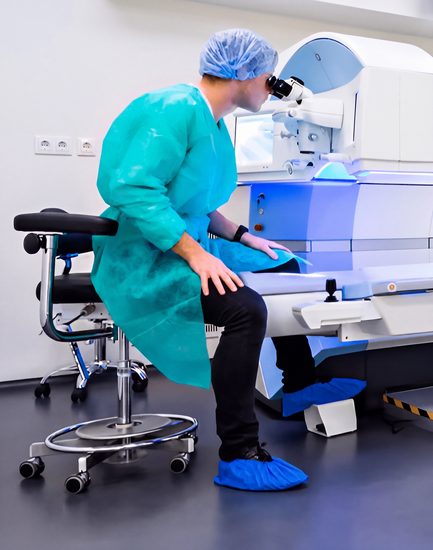
The price of keratopigmentation at the center New Eyes Paris is €7000 including VAT for both eyes. This price includes the pre-operative consultation with color simulation, the procedure and the 2 follow-up visits. It is not reimbursed by French national health insurance or by private health insurers: it is a cosmetic procedure.
| Keratopigmentation of both eyesPre-operative consultation and simulation, procedure, follow-up appointments the next day and at 6 months | 7000 € incl. VAT |
|---|---|
| Extra pigment bottleIf the chosen shade requires several pigments | 1000 € |
| Color retouching or modificationPossible starting 1 year after the procedure | 3000 € incl. VAT |
Payment is due in full, either by bank transfer at least 8 days before the procedure or by credit card at the clinic on the day of the procedure. Checks are not accepted. If you are traveling from afar, a quote can be provided after your medical file has been reviewed and your eligibility has been confirmed remotely.
Details of what the price includes, and why comparing prices is not enough, can be found in the article How much does keratopigmentation cost?
What colors can be obtained through keratopigmentation?
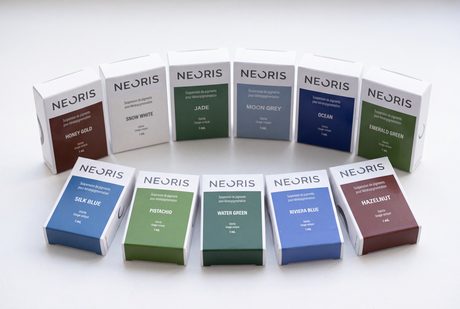
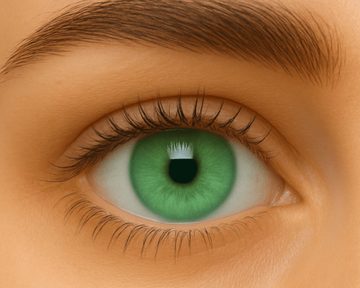
Keratopigmentation allows for the creation of blues, greens, greys, and honey or hazelnut shades: 12 shades in total, obtained from 8 Neoris pigments, used alone or mixed together. During the consultation, a personalized simulation will show you the result based on your natural hair color, skin tone, and desired outcome. The pigments are designed to mimic the natural hues of the iris.












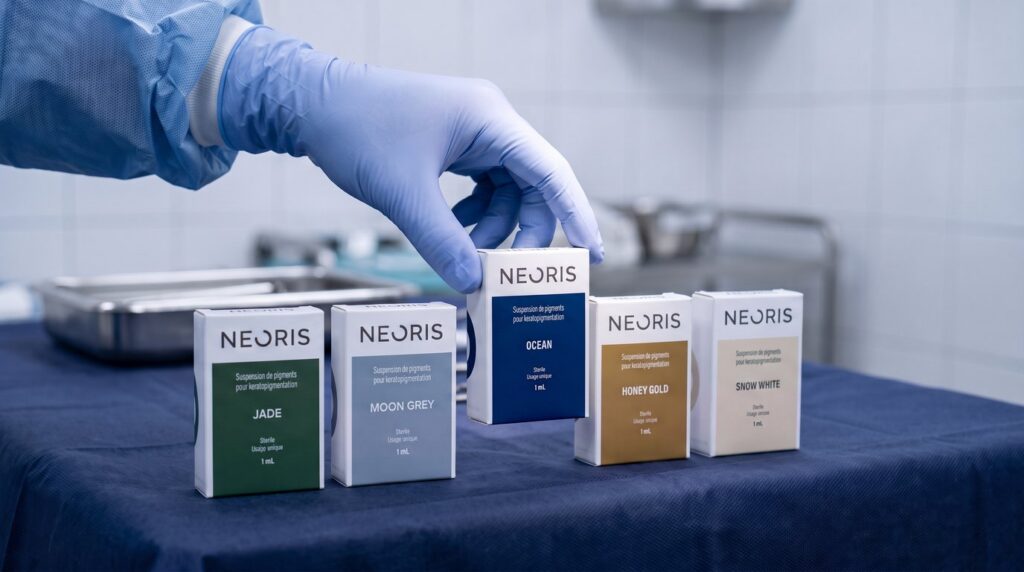
Pigments Neoris
We exclusively use the 8 Neoris pigments, developed specifically for aesthetic keratopigmentation and manufactured in Switzerland according to strict pharmaceutical standards. Used alone or mixed, they allow for the creation of all 12 shades in the palette. They are sterile, biocompatible, and contain no unstable or magnetic compounds, making MRI scans possible after the procedure.
Before/after: the result of keratopigmentation
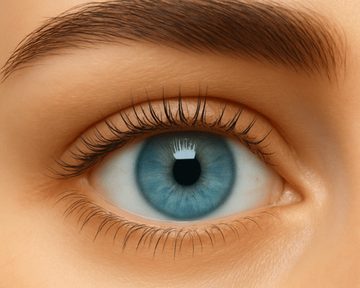
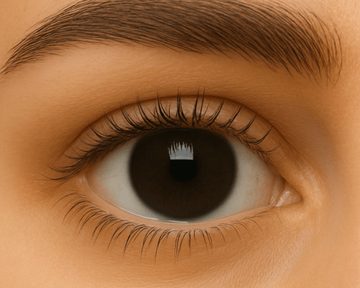
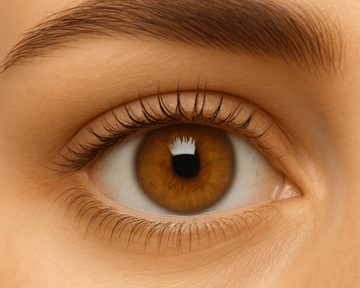
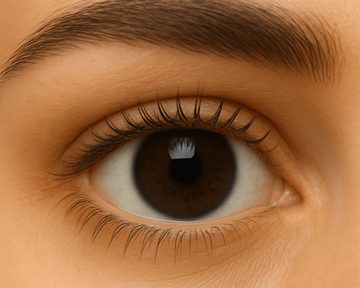
After keratopigmentation, the pigment forms a colored ring on the periphery of the cornea, mimicking the natural hues of the iris. The videos alongside show a complete procedure and the result as described by a patient.
The before/after videos, sorted by color range, are gathered on our Results page, along with the testimonials of patients operated on at the center.
Our before/after results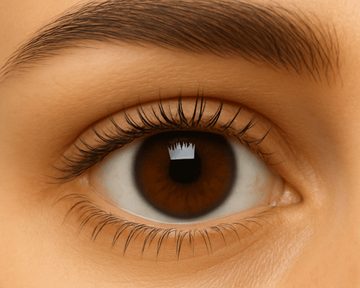
Will I be able to have an MRI after keratopigmentation?
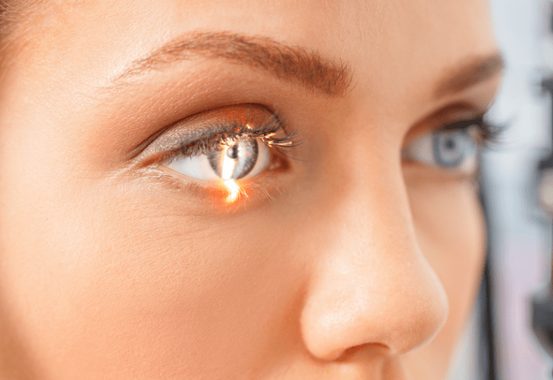
Yes. The pigments in Neoris dyes used for keratopigmentation do not contain any magnetic compounds, such as magnetite found in some dyes from other manufacturers: an MRI scan remains possible. The center of the cornea remains free, allowing an ophthalmologist to examine the back of the eye and perform cataract surgery if necessary.
This point was verified in a study published in 2023 in the European Journal of Ophthalmology, co-authored by Dr. Ferrari: in 60 eyes examined 6 months after the operation, screening for eye diseases could be carried out without difficulty in 100% of patients. The first cataract surgery after keratopigmentation was performed by Dr. Ferrari in 2019, and others have since been performed by other surgeons.
Who is eligible for surgery?
Keratopigmentation is possible for anyone 21 years of age or older whose eye exam reveals no contraindications. There is no upper age limit: the health of your eyes determines the best option. An online pre-eligibility test can be taken in just a few minutes to check for any major contraindications; it does not replace an examination, but it saves you an unnecessary trip.
Keratopigmentation remains a possibility after certain eye surgeries, such as cataract surgery or laser iris depigmentation, provided that the eyes are perfectly healed.
Coming to Paris for a keratopigmentation
Keratopigmentation is performed only at the New Eyes Paris center, located at 6 rue de la Grande Chaumière in the 6th arrondissement.
Whether you come, for example, from Lyon, Marseille, Bordeaux, Nantes, Strasbourg or Nice, from Belgium, Switzerland or further afield, the organization is the same: remote pre-assessment, quote, arrival the day before, check-up the day after.
Initial contact can be made via video conference or telephone. Consultations are conducted in French, English, Italian, and German. It is recommended to arrive the day before the procedure and stay for at least 24 hours afterward; a list of hotels near the center is available. A follow-up teleconsultation is scheduled between 3 and 6 months after the operation.
- Centre New Eyes Paris - 6 rue de la Grande Chaumière, 75006 Paris
- French patients: 01 53 10 10 00
- International patients: +33 674 064 520 (Whatsapp)
- Request a consultation or visit the online center
OUR EYE SURGEONS
Two ophthalmic surgeons who are experts in the annular keratopigmentation technique, combining medical precision and aesthetic sense.
Dr. Francis Ferrari
Ophthalmic surgeon
Inventor of the method FLAAK and author in 2013 of the world's first aesthetic keratopigmentation, Dr. Ferrari has since been training surgeons worldwide.

Dr. Jean-françois Faure
Ophthalmic surgeon
Dr. Faure, an experienced keratopigmentation surgeon, performs the center's procedures in tandem with Dr. Ferrari. He guides each patient with rigor and precision.

F.A.Q
Short answers to the practical questions we are most often asked. All frequently asked questions

Are both eyes operated on at the same time?
Yes, both eyes are operated on one after the other, during the same procedure.
Do I need to stay at the clinic after the operation?
No, you can go home the same day after a short rest.
Is the procedure covered by insurance?
No, it is not covered by Social Security or mutual insurance companies.
Can I fly after the procedure?
Yes, from the next day unless otherwise indicated by the doctor.
Will I be able to wear contact lenses or makeup afterwards?
Yes, after healing (usually 1 week). This will be specified during follow-up.
Is keratopigmentation a tattoo of the eye?
No. Eye tattooing involves injecting dye into the white of the eye with a needle, performed by a non-medical tattoo artist, and serious complications have been reported. Keratopigmentation, on the other hand, uses a laser to inject dye into the cornea, without a needle. These are two completely different procedures.
Why doesn't the color cover the iris all the way to the center of the eye?
Making the edges of the cornea more or less opaque with pigment has no effect on vision. Covering more of the center would significantly limit the field of vision and complicate examination of the fundus and certain surgeries, such as cataract surgery.
Can I bring someone with me on the day of the procedure?
Yes, and it is even recommended.


Take the first step towards a look that suits you
Our surgeons welcome you for a personalized consultation to assess your project, answer your questions and define the ideal color for your eyes.
